

Explore professional construction and contracting solutions in the UAE. Discover...
Read MoreSustainable Building in the UAE: Green Materials and Cooling Strategies That Pay Off
Sustainable construction in the UAE means designing and building structures that use less energy, water and raw material over their lifetime, with cooling as the biggest lever. The strategies that pay off most are high-performance glazing and insulation, reflective roofs and shading, efficient air conditioning or district cooling, low-carbon concrete and recycled materials, and solar power. Most reduce running costs year after year, which is why they are increasingly treated as sound investments, not optional extras.
In a climate where summer temperatures regularly push past 40°C, a building’s cooling demand drives its electricity bills, its carbon footprint and its comfort. This guide explains where the real savings are, which materials are worth specifying, and how to plan a sustainable project from the start.
Why does sustainable construction matter in the UAE?
Three forces make it a priority:
- Climate: Cooling accounts for a large share of a building’s energy use in the UAE, so efficiency gains here have an outsized effect on running costs.
- Regulation and national targets: The UAE has set long-term goals around clean energy and net-zero emissions, and authorities in Dubai and Abu Dhabi apply green building requirements to new developments.
- Market value: Tenants, buyers and corporate occupiers increasingly look for lower utility bills and recognised green credentials, which can support occupancy and asset value.
Sustainability is no longer a niche feature. For many projects it is part of the baseline brief.
What green building rules apply in the UAE?
Requirements vary by emirate and project type, so confirm what applies to your site early. Commonly referenced frameworks include:
- Dubai: Dubai Municipality’s green building regulations and specifications, and the Al Sa’fat green building rating system, which apply to new buildings in the emirate.
- Abu Dhabi: The Estidama programme and its Pearl Rating System, which sets minimum requirements for new buildings.
- International certifications: LEED and similar rating systems, often chosen voluntarily by developers and corporate occupiers.
Rules are updated from time to time, so check current requirements with the relevant authority or your consultant before design is finalised. Our guide to Dubai Municipality construction approvals explains how these requirements fit into the permit process.
Which cooling strategies pay off most?
Because cooling dominates energy use, start here. The best results come from reducing the cooling load first and then supplying the remaining cooling efficiently.
1. Reduce heat gain through the building envelope
The cheapest cooling is the cooling you never need. Focus on:
- Insulation: Quality wall and roof insulation slows heat transfer into the building.
- High-performance glazing: Low-emissivity, double-glazed and solar-control glass reduces heat gain while keeping daylight.
- Thermal breaks and airtight detailing: Prevent heat bridges and uncontrolled air leakage.
2. Use shading and smart orientation
Building orientation, overhangs, louvres, mashrabiya-inspired screens and landscaping can block direct sun before it reaches the glass. Good orientation and shading are design decisions, which means they cost far less at the planning stage than as retrofits.
3. Specify reflective and cool roofs
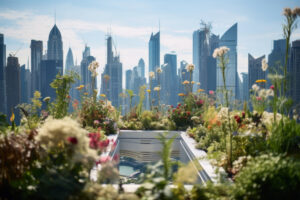
Roofs take the brunt of the sun. Light-coloured, high-reflectance roofing and coatings reduce surface temperatures and the heat transferred indoors. Green roofs can add insulation and reduce the urban heat island effect where structure and maintenance allow.
4. Choose efficient cooling systems
Once the load is reduced, the system matters:
- High-efficiency chillers and VRF systems consume less electricity for the same cooling output.
- District cooling can be an efficient option for developments connected to a district network.
- Smart controls and building management systems (BMS) adjust cooling to occupancy and conditions, preventing waste.
- Regular maintenance keeps systems performing at their design efficiency.
5. Improve ventilation and indoor air quality
Heat recovery ventilation and well-designed fresh air systems maintain healthy air without throwing away conditioned energy. Better indoor air also supports occupant comfort and productivity in offices and commercial spaces.
Which green building materials are worth using in the UAE?
Material choices affect both embodied carbon (the emissions created making and transporting the material) and long-term performance.
- Low-carbon concrete: Replacing part of the cement with supplementary materials such as fly ash or ground granulated blast-furnace slag (GGBS) can reduce the carbon footprint of concrete while improving durability in aggressive coastal conditions.
- Recycled and low-carbon steel: Steel with high recycled content lowers embodied carbon.
- Insulated panels and blocks: Thermal blocks and insulated panels build efficiency into the structure itself.
- Low-VOC paints, adhesives and finishes: These improve indoor air quality.
- Locally sourced materials: Shorter transport distances reduce emissions and can shorten lead times.
- Durable, low-maintenance finishes: Materials that last longer reduce replacement waste and lifetime cost.
Always check that materials meet UAE standards and the project’s specification, and request product data sheets or certifications from suppliers.
What else makes a building more sustainable?
Cooling and materials matter most, but other measures add up:
- Solar power: Rooftop solar PV can offset a meaningful share of a building’s electricity use, and UAE solar conditions are strong.
- Water efficiency: Low-flow fixtures, efficient irrigation and greywater reuse reduce water demand.
- LED lighting and daylight design: Efficient lighting plus good daylighting cuts electricity use and cooling load from lighting heat.
- Waste management on site: Planning for waste segregation, reuse and recycling lowers disposal costs and environmental impact.
Do sustainable buildings really pay off?
In most cases, yes, but the return depends on the measure. Passive measures such as orientation, shading, insulation and glazing usually deliver the best value because they are built in once and keep working for the life of the building. Efficient cooling systems and solar can carry higher upfront costs but reduce operating expenses every month. Payback periods vary with project type, specification, tariffs and usage, so ask your contractor or sustainability consultant to model the options for your specific project instead of relying on rules of thumb.
The key point is timing. Sustainability decisions made at design stage cost far less than retrofits later.
How do you plan a sustainable construction project?
- Set clear goals early: Decide whether you are targeting regulatory compliance, a specific rating (such as Al Sa’fat, Estidama or LEED), lower running costs, or all of these.
- Involve your contractor at design stage: Early input on constructability, materials and costs avoids expensive redesign.
- Compare options on lifecycle cost: Look at upfront cost plus energy, maintenance and replacement over time.
- Specify and verify materials: Include performance requirements in the contract and check certifications.
- Commission and monitor: Test systems at handover and track energy use afterwards to confirm the building performs as designed.
Frequently asked questions
What is sustainable construction?
Sustainable construction is building in a way that reduces environmental impact and resource use across a building’s life, from materials and construction through operation to eventual reuse or demolition.
Is green building mandatory in the UAE?
Green building requirements apply to new buildings in several emirates, including Dubai and Abu Dhabi, although the specific rules depend on location and project type. Confirm the current requirements with the relevant authority.
How much can a building save on cooling costs?
Savings depend on the building type, design, systems and usage. A well-designed envelope combined with efficient cooling can reduce energy consumption meaningfully, and a consultant can estimate savings for your project.
What is the Al Sa’fat rating?
Al Sa’fat is Dubai’s green building rating system, used to assess the environmental performance of buildings in the emirate.
What is the Estidama Pearl Rating System?
Estidama is Abu Dhabi’s sustainability programme, and the Pearl Rating System assesses the sustainability of buildings, communities and villas.
Are green materials more expensive?
Some cost more upfront, and others cost the same or less. When you factor in lower energy use, durability and reduced maintenance, many deliver better value over the building’s lifetime.
Planning a sustainable construction project in the UAE?
Building green works best when sustainability is part of the plan from day one, not an add-on at the end. Automo Contracting LLC works with clients across the UAE to deliver construction projects with practical, cost-conscious sustainability measures, from material selection to efficient systems and authority compliance.
Contact the Automo Contracting team to discuss your project and explore which green strategies make sense for your budget.
Featured Blogs
Sustainable Construction in the UAE: Green Materials & Cooling | Automo Contracting
Explore sustainable construction in the UAE: the green materials, cooling...
Read More
Why Real Estate Is a Top Long-Term Investment | Automo Realty
Discover why real estate is one of the best long-term...
Read More
Dubai Municipality Building Permit Guide: Step by Step
Planning to build in Dubai? Follow this step-by-step guide to...
Read More